








The Future of Work: How Automation Is Reshaping Careers
The world of work is changing faster than ever before. Automation and artificial intelligence (AI) are transforming how we produce, communicate, and create value. From manufacturing floors to law firms and digital agencies, the future of work is being rewritten by machines that learn, adapt, and perform tasks once limited to humans.
But does this mean robots are replacing us? Not quite. The truth is more balanced — automation is reshaping careers, not erasing them.
1. The Rise of Smart Automation
Automation has moved far beyond factory robots. In 2025, smart systems powered by AI handle data analysis, logistics, customer service, and even creative processes.
This shift is enabling companies to:
-
Increase productivity and accuracy
-
Reduce repetitive workloads
-
Free up employees for more strategic, human-centered tasks
As automation becomes more integrated, career growth depends on how well individuals adapt to these new technologies.

2. Redefining Skills for the Digital Age
The future of work requires a new skill set — one that blends technical and human abilities. Soft skills like creativity, empathy, and leadership are becoming as important as technical knowledge.
Key skills in demand include:
-
Data literacy and digital fluency
-
Emotional intelligence (EQ)
-
Problem-solving and critical thinking
-
Adaptability and lifelong learning
In short, to thrive in a world of automation and careers, professionals must learn how to work with machines, not against them.
3. Industries Most Impacted by Automation
Not all industries will experience automation in the same way. Some will evolve rapidly, while others will focus on human expertise.
High-impact sectors include:
-
Manufacturing: Robotics and predictive maintenance
-
Healthcare: AI-assisted diagnostics and telemedicine
-
Finance: Algorithmic trading and automated risk analysis
-
Customer Support: AI chatbots and virtual assistants
-
Transportation: Autonomous vehicles and logistics automation
Each of these changes opens up new career paths — in data science, robotics, machine ethics, and AI supervision.
4. The Human Element Still Matters
Despite rapid innovation, humans remain the heart of the workplace. Creativity, empathy, and ethics can’t be automated. In fact, as routine work becomes automated, these qualities are what make professionals stand out.
Companies are increasingly valuing people who can bridge technology and humanity — those who lead with compassion and think beyond algorithms.
5. Preparing for the Future of Work
To stay relevant, workers and businesses must embrace continuous learning. This means investing in digital training, online education, and skill-up programs. Governments and organizations are also introducing reskilling initiatives to help employees transition into emerging roles.
Practical steps to prepare:
-
Stay updated with technology trends.
-
Learn automation tools relevant to your field.
-
Develop hybrid skills — human and digital.
-
Network in tech-driven communities.
-
Be open to career pivots.
Automation isn’t the end of opportunity — it’s the beginning of transformation.
Conclusion
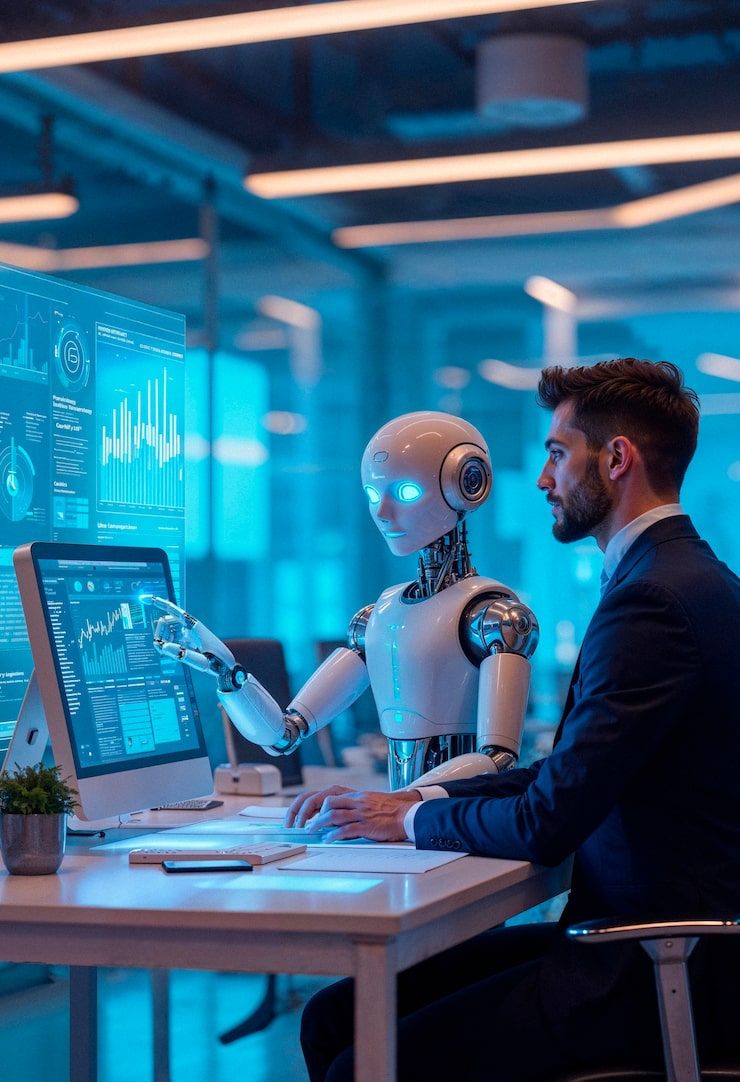
The future of work is a partnership between humans and machines. Automation may reshape careers, but it’s also creating new opportunities that didn’t exist a decade ago. The key lies in adaptability, creativity, and the courage to evolve.
If we embrace technology with purpose and vision, the future of work won’t replace us — it will empower us.